The research makes a compelling case for isometric exercise. For fitness operators, the opportunity is turning that science into a service members understand—and use.
Sponsored by Isophit

By Brad Thorpe, CEO of Isophit
The fitness industry knows how to keep people moving. We build facilities around lifting, running, cycling, pushing and pulling. But what happens when the resistance doesn’t move?
Quite a lot, as it turns out.
Isometric training involves producing muscular force while maintaining a relatively fixed joint position. Think of a wall sit, a plank or pushing against an immovable resistance. The movement may be minimal. The effort can be substantial.
For gym owners considering their next programming or equipment investment, isometrics deserve a closer look. Systems such as ISOPHIT provide a dedicated way to bring the method onto the gym floor. But the strongest case begins with what the training itself can contribute.
Here are three reasons to make room.
1. The blood-pressure research is too compelling to overlook
Strength training is often marketed through muscle. Isometric exercise gives operators another health outcome to discuss: resting blood pressure.
A major 2023 review published in the British Journal of Sports Medicine examined 270 randomized controlled trials involving 15,827 participants across several exercise categories. Isometric training was associated with average reductions of 8.24 mm Hg in systolic blood pressure and 4.00 mm Hg in diastolic blood pressure compared with non-exercising controls. It ranked highest for systolic blood-pressure reduction in the researchers’ network analysis.
Those figures describe the exercise category rather than a trial of ISOPHIT. They also represent average results across studied protocols, rather than a promise to every participant.
Nevertheless, the findings give fitness operators a substantive reason to consider isometrics within health-focused programming.
For a member whose motivation involves improving their health, that conversation may be more relevant than another calorie-burning challenge. It connects exercise with something they may already discuss at a medical appointment—and gives the facility an opportunity to explain how its coaching services can support broader health goals.
The practical takeaway is to broaden the offer. Aerobic and dynamic resistance training also reduced blood pressure in the review. Isometrics can sit alongside them as part of a comprehensive program.
Appropriate screening, progression and breathing instruction remain essential. Long-term improvements in resting blood pressure should not be confused with what happens during a strenuous isometric hold.
2. Isometrics give strength coaches another purposeful tool
A hold is easy to add to a workout. An effective isometric protocol requires more thought.
Position, effort, duration and intent all influence what a coach is asking the member to develop.
A systematic review by Oranchuk and colleagues examined longer-term adaptations to isometric training and reported improvements in maximal force and muscle size. It also identified meaningful differences associated with muscle length, intensity and the intent to produce force rapidly.
That gives trainers a reason to look beyond using static exercises simply as finishers.
Isometric work can become a deliberately selected component of a strength program, with a clear objective and progression. The coach’s job is to explain why the exercise belongs, choose an appropriate setup and evaluate whether it serves the member’s goal.
The muscular demand is real, too. In a small laboratory study, Broxterman and colleagues examined energy turnover and fatigue during repeated, all-out isometric knee extensions. The research demonstrated considerable physiological demand despite the absence of visible movement. It did not establish long-term training outcomes, but it challenges the assumption that stillness means little work is happening.
For operators, the opportunity is stronger coaching. Dedicated equipment earns its place when staff can turn its capabilities into purposeful sessions.
3. A defined offering gives members a reason to engage
An unfamiliar piece of equipment needs an introduction. Otherwise, it risks becoming the station members walk past.
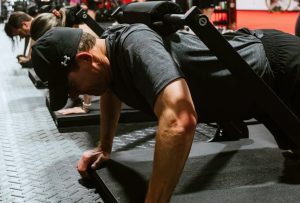
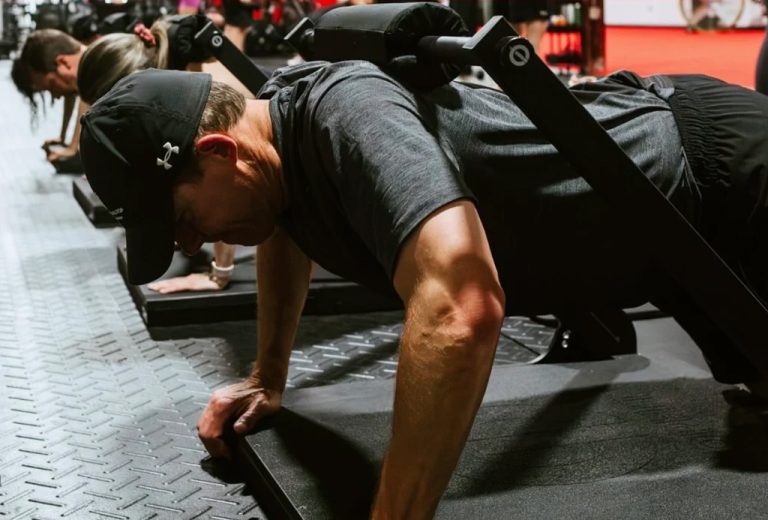
ISOPHIT offers equipment and structured programming designed around isometric training. Its 30inThirty format, for example, organizes 30 isometric contractions into a 30-minute session.
For a facility, that creates several potential applications: personal training, an introductory series or a dedicated small-group offering.
The business opportunity is a proposition to test locally. Research on blood pressure does not establish membership retention or equipment profitability.
Start with a clear audience and an understandable invitation: learn the method, receive coaching and discover how it fits into your training.
Then assess participation, repeat bookings, delivery costs and member feedback. Plan enough space for the exercises, transitions and instruction—not simply the equipment’s footprint.
A successful offering needs a trained team and a clear purpose. Members should leave understanding what they did, why it mattered and what comes next.
Isometric training deserves more than an occasional plank challenge. The evidence warrants attention. Thoughtful programming can give it a meaningful place on the gym floor.